

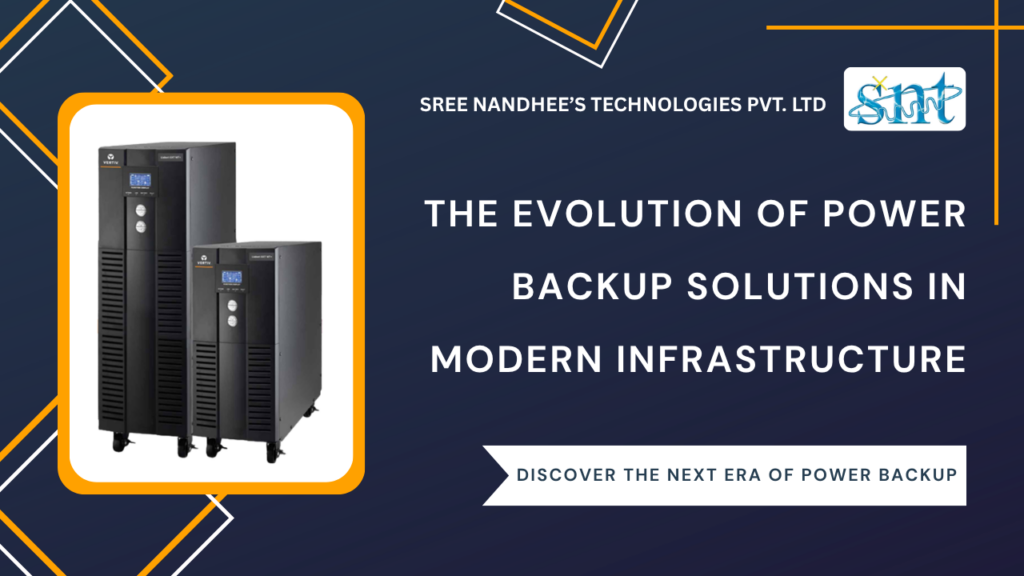
The digital transformation has made continuous power supply the essential foundation for all modern infrastructure development. Data centers and healthcare facilities as well as commercial complexes and manufacturing units depend on reliable power supply to maintain their operations and protect their sensitive systems.
The development of power backup systems has progressed from traditional systems to modern intelligent systems which provide better energy efficiency through their ability to scale. The technological progress demonstrates how infrastructure development requires better resilience capabilities while introducing efficient sustainable solutions.
The Shift from Conventional to Advanced UPS Systems
The traditional method of power backup used basic UPS systems and diesel generators to provide temporary power during electrical outages. The solutions used during that time period were effective but they suffered from three major limitations which included lack of operational flexibility and reduced energy efficiency and missing advanced monitoring functions.
Modern UPS systems, such as mid-range solutions designed for critical applications, now deliver far more than just backup power. The system has been created to achieve high efficiency while delivering optimized performance through its intelligent power management system. The systems enhance infrastructure performance through their improved conversion efficiency and reduced energy loss.
Energy Efficiency as a Core Priority
The rising energy costs and the growing need to protect the environment have made efficiency into a major requirement for power backup systems. Today’s UPS systems use advanced operating modes which achieve substantial power savings while delivering consistent high system performance.
Innovations such as:
- High-efficiency operating modes
- Advanced battery technologies with longer life cycles
- Optimized thermal management systems
Organizations have achieved cost reductions and environmental impact reductions through these solutions. The new approach supports worldwide sustainability objectives while providing organizations with financial advantages that will last for extended periods.
Modular Design and Scalability
One of the most transformative developments in modern UPS technology is modular architecture. Unlike traditional fixed-capacity systems, modular UPS solutions allow businesses to scale their power infrastructure based on evolving needs.
This approach offers several advantages:
- Faster deployment and reduced installation complexity
- Flexibility to expand capacity without major infrastructure changes
- Improved system redundancy and reliability
The ability to scale operations proves essential for expanding businesses and data-centric organizations which experience sudden fluctuations in their power needs.
Enhancing Reliability in Critical Environments
Business operations that rely on digital systems face major losses from even short power outages. The latest uninterruptible power supply systems provide maximum operational time through their advanced system reliability capabilities.
These include:
- Fault-tolerant system architecture
- Hot-swappable components for uninterrupted maintenance
- Real-time diagnostics and predictive monitoring
The systems deliver mission-critical reliability standards which hospitals and IT infrastructure and financial institutions require through their ability to reduce downtime and support active maintenance work.
Integration with Smart Infrastructure
The evolution of power backup solutions is closely linked with the rise of smart infrastructure. Today’s UPS systems are no longer standalone units—they are integrated into intelligent ecosystems that enable real-time monitoring and control.
With features like:
- Remote access and system monitoring
- Data-driven performance insights
- Integration with centralized management platforms
Organizations can use real-time data to improve their energy consumption and operational processes, which enables better decision-making. The current integration level transforms power backup systems into essential business assets, which organizations use as their emergency response systems.
Supporting Emerging Technologies
The quick adoption of cloud computing and artificial intelligence and IoT technologies has created a greater need for dependable high-capacity power systems. The contemporary UPS systems provide advanced load management capabilities to support high-density operational spaces.
The increasing adoption of digital innovation by businesses will create a growing requirement for power infrastructure development. Organizations can achieve their expansion goals through advanced UPS solutions which deliver stable performance and dependable reliability.
The Importance of Expert Implementation
The power backup system performance depends on proper system installation combined with technological progress and system selection procedures. Businesses can obtain solutions that match their specific needs through the partnership with a reliable UPS dealer in Chennai.
An experienced provider can:
- Assess power needs and recommend the right configuration
- Ensure seamless installation and commissioning
- Provide ongoing support and preventive maintenance
The system requires these particular skills to achieve its highest operational efficiency while increasing equipment durability and maintaining equipment reliability over time.
The Future of Power Backup Solutions
Power backup systems will develop through time because infrastructure requirements will undergo changes. The future is being shaped by important trends which will continue to develop throughout upcoming time periods:
- Integration with renewable energy sources
- Adoption of advanced energy storage technologies
- Increased use of AI for predictive maintenance and automation
- Development of compact, high-density power solutions
The new developments will improve operational efficiency, environmental sustainability, and organizational resilience which organizations need to create infrastructure that will serve them in the future.
Conclusion
The evolution of power backup solutions highlights the critical role they play in modern infrastructure. From basic backup systems to intelligent, scalable, and energy-efficient solutions, UPS technology has become a cornerstone of operational continuity.
For businesses aiming to stay competitive in a rapidly evolving landscape, investing in advanced power solutions—and collaborating with a reliable UPS Dealer in Chennai—is essential. It is not just about preventing downtime; it is about enabling growth, ensuring reliability, and building a resilient future.