

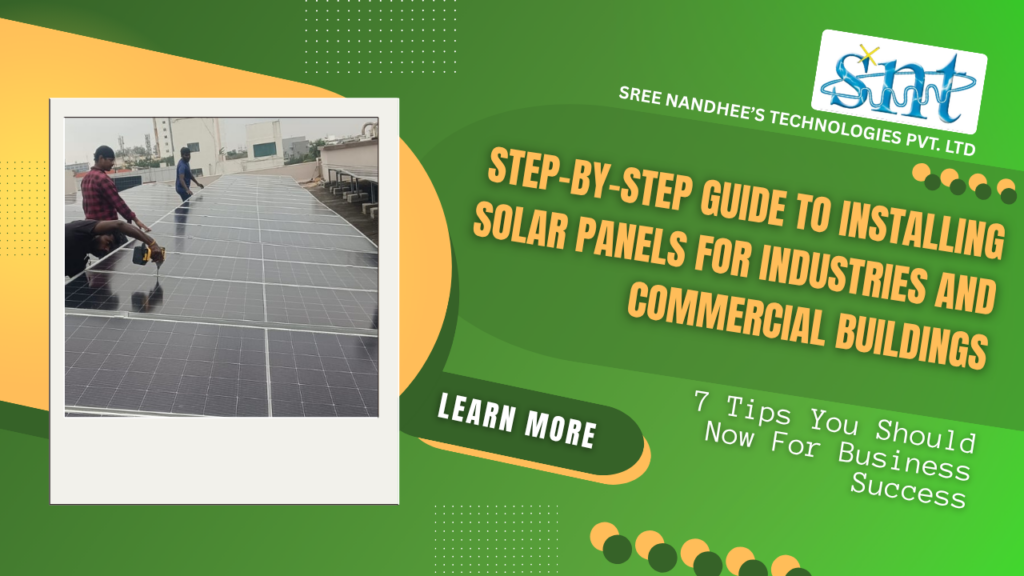
With electricity prices climbing and a growing need for sustainable energy, businesses and big buildings are moving fast toward solar power options. Installing a business solar setup is not just about cutting electricity bills , it’s more about getting a bit of long term operational efficiency, some energy independence and well, being friendlier to the environment. Today companies pick Commercial Solar Panel Installation in Chennai to boost output while they reduce reliance on regular power sources, and save long term.
Commercial solar projects need careful planning, engineering and professional execution to secure the highest efficiency and a good long term payoff. From site checking to the final commissioning every small step has a key role in getting a solar energy set up to work well and deliver returns over time.
Understanding Commercial Solar Power Systems
Commercial solar systems are meant to produce power for factories, storage places, office buildings, hospitals, schools, shopping centers and other industrial sites. They are usually put on rooftops , raised structures or on ground mounted spaces depending on the area available and the power requirement.
Modern commercial solar solutions include high-efficiency solar panels, smart inverters, net metering integration, and remote monitoring systems. Businesses investing in Commercial Solar Panel Installation in Chennai benefit from reduced operational expenses and faster return on investment.
Step 1: Site Assessment and Energy Analysis
The initial move in any solar setup project is to carry out a detailed site survey and an analysis of how much energy is used. Engineers check the building structure rooftop condition available shadow free area and also the typical, average electricity use.
Factors analyzed during this stage include:
- Monthly EB bill and energy usage
- Roof orientation and tilt angle
- Structural strength of the building
- Nearby obstructions causing shadows
- Future power expansion requirements
A proper site assessment ensures that the solar system is designed to generate maximum power throughout the year.
Step 2: Designing the Solar System
Once the site analysis is complete the engineering team designs a tailored solar power system based on the business’s energy requirement. This stage includes preparing single line diagrams SLDs, load calculations and selecting suitable solar components. Sometimes they use a simpler schematic, round the load numbers, and pick parts that favor reliability over the cheapest choice.
Commercial solar projects commonly use:
- Mono PERC or TOPCon solar panels
- Grid-tied inverters
- High-strength mounting structures
- Remote monitoring systems
- Net metering-compatible equipment
Professional companies offering Commercial Solar Panel Installation in Chennai also focus on wind resistance, safety standards, and future scalability during the design process.
Step 3: Government Approvals and Net Metering
Before installation begins, necessary approvals from the local electricity board or DISCOM are obtained. Net metering approval is one of the most important steps in commercial solar projects.
Net metering, lets surplus electricity produced during daytime operations be sent back to the grid. Companies and small firms receive energy credits,that help to cut monthly electricity bills quite a bit, sometimes those credits are applied later or counted differently.
Experienced EPC providers handle:
- DISCOM documentation
- Electrical safety approvals
- Net metering applications
- Compliance with CEA regulations
- Inspection coordination
This process ensures smooth integration of the solar plant with the utility grid.
Step 4: Procurement of Solar Components
After approvals, high-quality solar equipment is procured for the project. Selecting reliable components is essential for ensuring long-term performance and minimal maintenance.
Important components include:
Solar Panels
These convert sunlight into electricity and are the core of the solar system.
Solar Inverters
Inverters convert DC power generated by panels into usable AC power for industrial and commercial applications.
Mounting Structures
Durable galvanized structures are used to withstand harsh weather conditions and strong wind speeds.
Monitoring Systems
Remote monitoring allows businesses to track system performance and energy generation in real time.
Choosing premium-quality equipment during Commercial Solar Panel Installation in Chennai helps industries achieve better efficiency and longer system life.
Step 5: Installation of Mounting Structures and Panels
The installation process begins with mounting structure fabrication and positioning. Structures are fixed securely to rooftops or elevated platforms to support the solar panels safely.
After structure installation:
- Solar panels are mounted securely
- DC wiring connections are completed
- Inverters are installed
- Earthing and lightning protection systems are connected
- Safety inspections are conducted
The professional installation teams make sure of the right handling of the cables and safety conformity and they align the panels in an optimized way to get maximum sun exposure.
Step 6: Electrical Integration and Grid Connection
Once the physical installation is done the solar array is tied into the building’s electrical network and the utility public grid, sometimes the connection feels a bit odd. The inverter then lines up the solar output with the electricity board supply to keep operation running, without interruption.
During this phase:
- Energy generation is tested
- Voltage and frequency synchronization are checked
- Safety protection systems are verified
- Net meter functionality is tested
This stage is critical because it determines the efficiency and reliability of the entire solar power system.
Step 7: Testing and Commissioning
After installation and integration with the grid the system goes through the final tests and the start up. Engineers check the overall performance, the energy output and the safety when operating.
Businesses receive:
- System operation training
- Warranty documentation
- Performance reports
- Maintenance guidelines
- Remote monitoring access
Companies opting for Commercial Solar Panel Installation in Chennai often experience significant savings on electricity costs within the first few months of operation.
Benefits of Commercial Solar Installation
Commercial and industrial solar systems provide several long-term advantages:
- Reduced electricity expenses
- Lower dependence on EB supply
- Faster ROI and long-term savings
- Minimal maintenance requirements
- Improved sustainability goals
- Reduced carbon footprint
- Enhanced energy reliability
Many industries are now adopting solar technology because it offers stable daytime power generation without fuel costs. Commercial solar systems also support businesses in meeting ESG and environmental compliance goals.
Why Professional EPC Support Matters
Commercial solar projects require technical know-how and solid engineering and must comply with electrical codes. Choosing a seasoned EPC company, one with plenty of hands-on experience usually helps the work move smoother from design through to commissioning but you still need regular oversight and clear specifications otherwise things can slip and cause delays.
An experienced solar integrator provides:
- End-to-end project management
- In-house engineering support
- Quality installation practices
- DISCOM approval assistance
- Long-term maintenance support
Businesses planning for Commercial Solar Panel Installation in Chennai should always choose a trusted provider capable of delivering customized, scalable, and future-ready solar solutions.
Conclusion
Installing panels that catch the sun for industries and commercial buildings is a smart bet on the future for companies and shops looking to lower operating costs and, embrace energy that lasts environmentally friendly. A project planned right and carried out by pros, delivers long-term savings on money, more energy independence and plus, benefits for the environment. It’s a good move, that pays back over time and helps the place run cleaner.
From site assessment and system design to installation and commissioning, every stage contributes to the success of the solar project. With increasing energy demands and rising electricity costs, commercial solar power is becoming an essential solution for modern businesses seeking efficient and reliable power generation.